
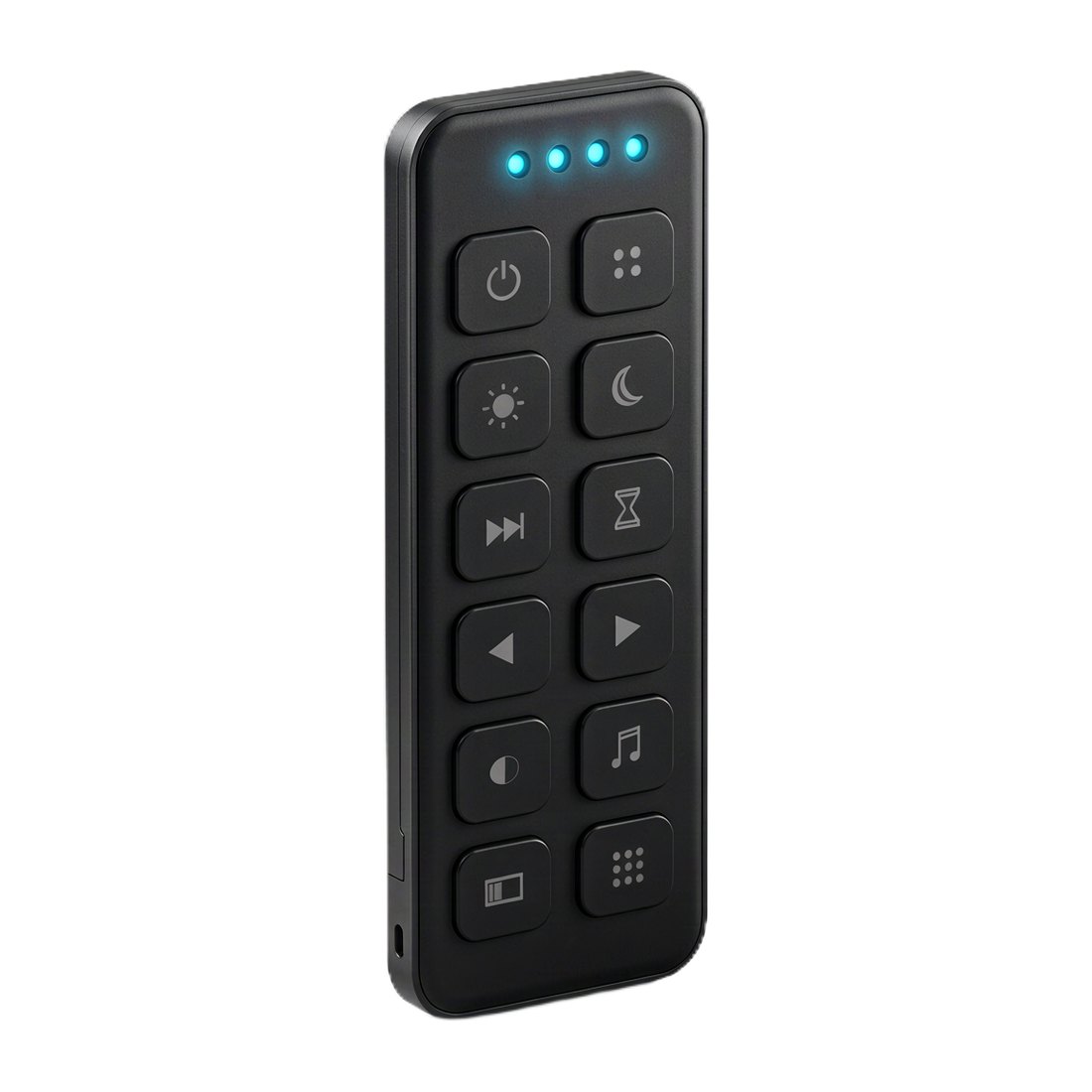
433 MHz scene remote · Handheld · no line of sight
RF Remote
433.92 MHz · 12 keys · 4 group IDs
The RF remote is a 433.92 MHz handset that changes colour, intensity and built-in programs on four ID groups, with no console, no app, and no need to point it at the fixture.
A card-size handset that sends a short 433 MHz command; the fixture receives it and runs a program of its own. It is not a console and it carries no DMX data — which is why it works on a coin cell, why it keeps working with the remote back in your pocket, and why the 2.4 GHz wireless DMX link stays untouched.
Typical use: Zone and scene changes on battery-powered rigs, weddings and events where nobody wants to walk to a console, and quick colour or intensity changes during a show.
Keys, group behaviour and radio compliance are listed above; the pairing sheet and battery data are supplied on request.
- Function
- Handheld 433 MHz scene remote · not a console, not a wireless DMX transmitter
- Band
- 433.92 MHz (433.05–434.79 MHz)
- Output
- ≤ 10 mW e.r.p · OOK / ASK short command packets · ≤ 400 kHz occupied bandwidth
- Range
- Up to 100 m open field, line of sight · typical 50 m · 30 m in complex environments
- Groups
- 4 group IDs · hold GROUP for 2 s for ALL (all four LEDs flash once)
- Keys
- 12 keys, 2 columns × 6 rows · one icon per key · no + or − symbols on the body
- Indicators
- 4 group LEDs · 100 ms flash after a key press, otherwise off
- Power
- CR2032 coin cell
- Size
- approx. 85 × 50 × 6.5 mm · fixed integral antenna
- Signature keys
- FROST — one-key diffusion layer (fog / semi / clear / dynamic) · PSM — one-key run time MAX / STD / ECO
- Not on the remote
- DMX address, DMX mode, wireless link and settings — those stay on the fixture panel
Radio compliance
This device is a short-range low-power radio transmitter compliant with the 433.05–434.79 MHz “General Wireless Remote Control” category (≤10 mW e.r.p, occupied bandwidth ≤400 kHz) and uses a fixed integral antenna which must not be replaced. Do not modify the operating scenario, extend the frequency range, increase transmit power (including adding an RF power amplifier), or change the antenna. It must not cause harmful interference to licensed radio stations and is not entitled to protection from such interference. It must accept interference from ISM equipment and other licensed stations. If harmful interference occurs, stop operation immediately and resume only after the interference is eliminated.
How this remote is used
433 MHz commands — a handset, not a console, and not a wireless DMX link.
433 MHz · four groups
One key per group
Group 1 to 4 cycle on a single key; hold it for two seconds and all four LEDs flash once to address the whole rig. Neighbouring rigs keep their own groups.
433 MHz · no aiming
It does not need to see the fixture
433 MHz bends around people, flight cases and truss. Up to 100 m in the open with line of sight, typically 50 m, and it is designed to keep working through a case in a crowded room.
Two keys nobody else has
Frost Glass and run time, one press each
No menu diving: one key cycles the PDLC diffusion layer (fog / semi / clear / dynamic), another switches MAX / STD / ECO run time — the two features these fixtures are bought for.
Same family
Fixtures that share this housing, battery platform and radio.
Questions buyers ask
Short answers, with the numbers behind them.
- How many groups can the remote control?
- Four. Each key addresses one group, and holding a group key for two seconds addresses all four at once, so neighbouring rigs keep their own groups.
- Does it need line of sight?
- No. 433 MHz works around people, flight cases and truss - up to 100 m in the open, typically 50 m in a room, and it keeps working through a case.
- Is it a wireless DMX transmitter?
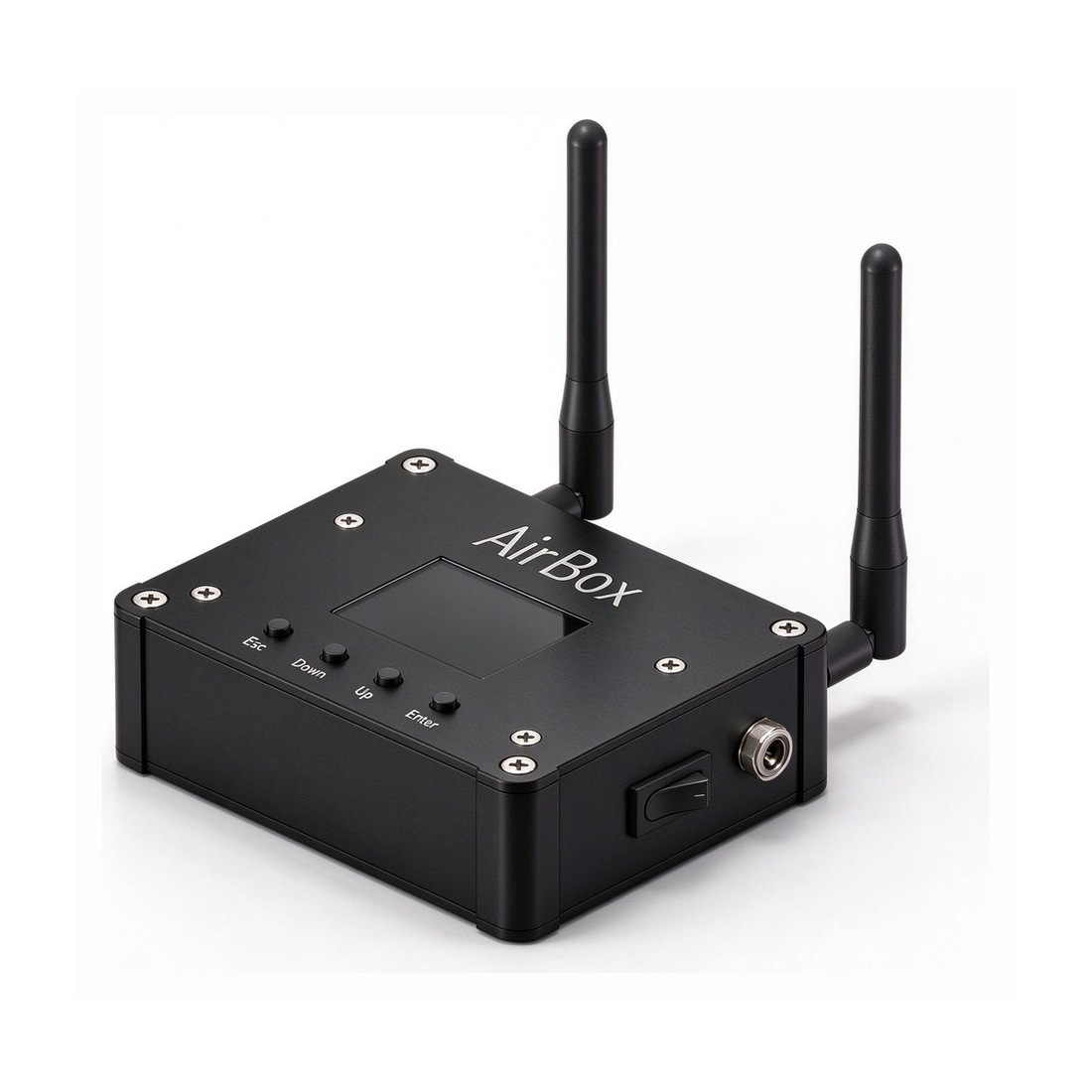
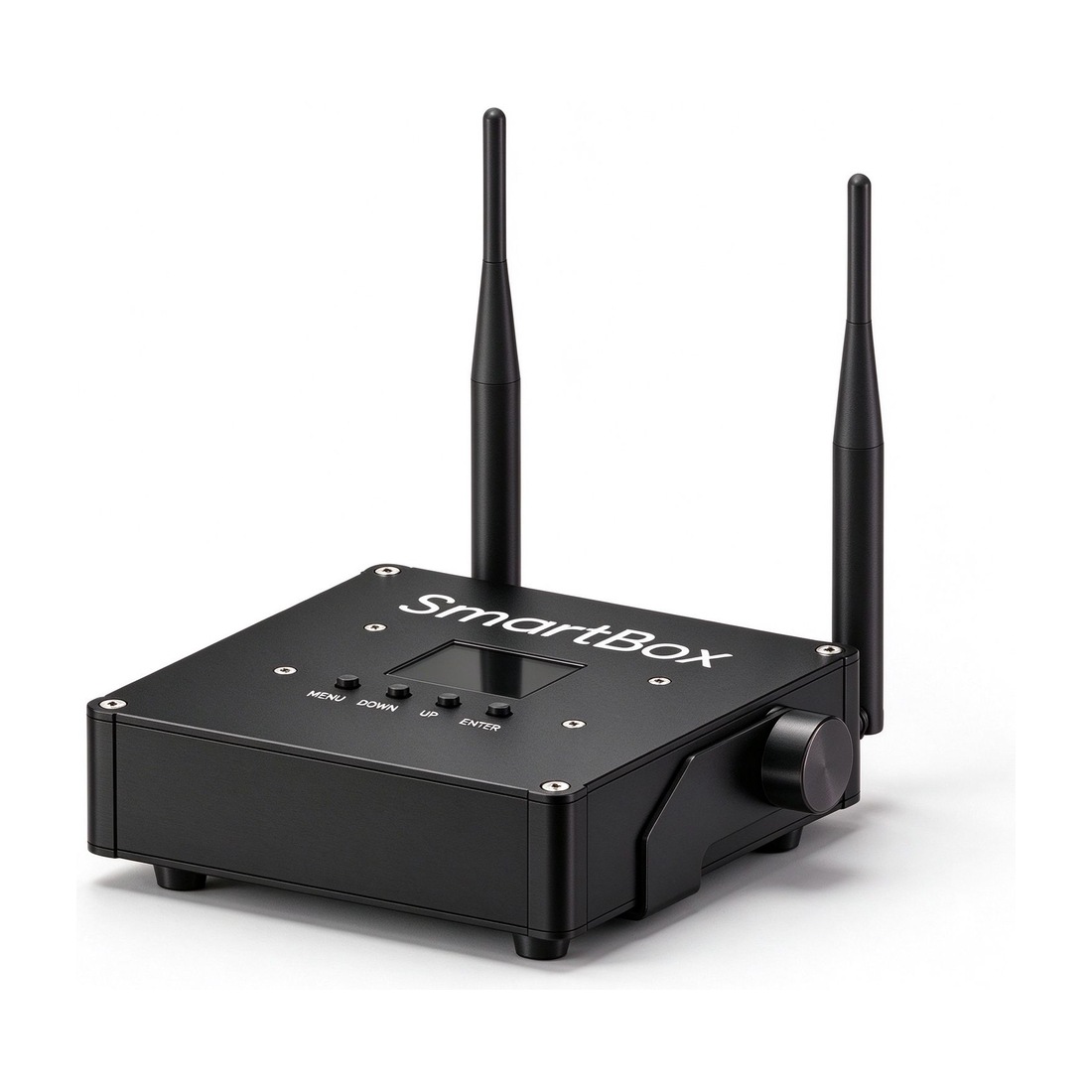
- No. It is a scene remote: colour, intensity and programs. Wireless DMX-512 comes from the AirBox or the SmartBox.